Innovations
Armor you can't see.
A rider protection and cooling platform built for how we actually crash: forward at 40 mph onto knees and palms, sideways onto a hip, or straight down onto the tailbone from standing height. Compression garments carry Level 2 armor on mechanical docks, welded cooling panels run ice water against the skin, and all of it disappears under a sport coat and jeans.
We're building it in the open. Every spec, pattern and print file is on this page as it's finished.
Status: v0 prototype in build — bench loop, then donor garments, then two weeks of riding.
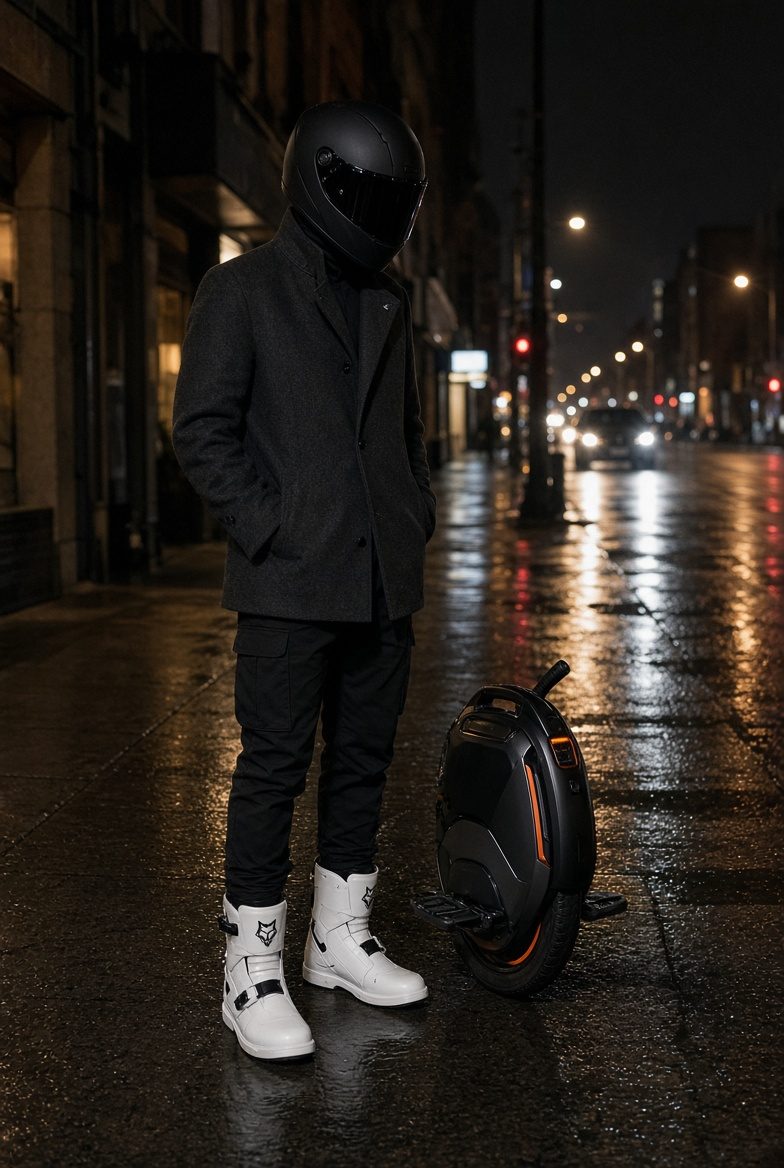
The platform
Three carriers. Modules that plug in. Interfaces that never change.
Garment shops sew carriers. Specialists make modules. The interfaces between them are the product: a carrier from any factory fits a module from any supplier, and the shop that sews the vest never touches a pad, a pump or a ring.
Capri
3/4 compression pant, high rise. Level 2 hip, knee and tailbone pads plus Level 1 thigh on docks, a continuous titanium mail line down each outer leg, and a waistband that is the belt: ice bladders on the hips, the control puck at the lumbar.
Vest
Front-zip compression vest, stand collar. Full Level 2 back protector, split chest, shoulder caps, five welded cooling panels, four micro fans, and the manifolds. Snaps into the capri waistband so the shoulders carry the belt.
Sleeves
Compression arm sleeves with upper-arm, elbow and forearm docks. Four magnetic snaps into the vest armhole, off in five seconds. Carry the wrist cooling lines for boost mode.
Shells
A single-layer AAA denim jean and a wool sport coat with an aramid/UHMWPE lining at the slide zones, bi-swing back, magnetic lapels that close into a stand collar, and a hem cut over the puck. No armor in either; that's why they drape like clothes.
| Interface | Fixed spec |
|---|---|
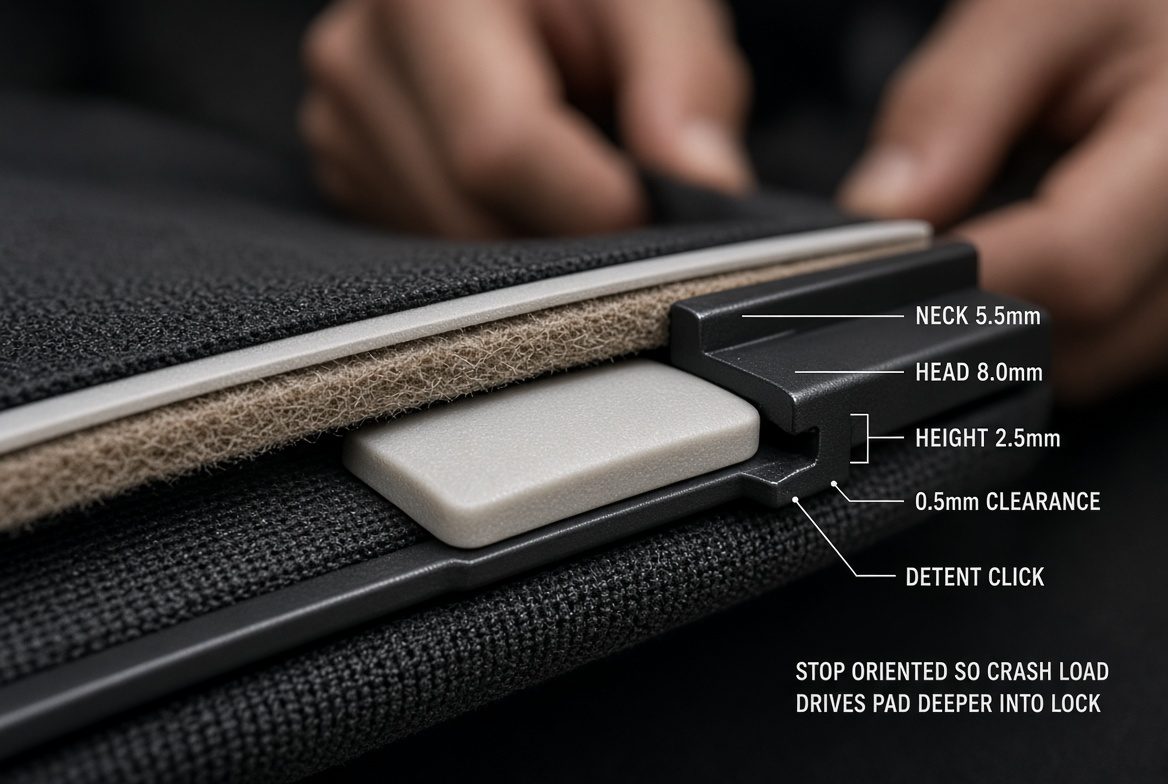
| Dock | TPU dovetail rail bonded to the garment, TPU frame bonded to the pad. Neck 5.5 mm, head 8.0, height 2.5, 0.5 clearance. Pad slides in, clicks past a detent, lands on a stop oriented so crash load drives it deeper into lock. |
| Fluid | 4 mm polyurethane tube, 4 mm push-in fittings, non-spill dry-break couplings. Female on the carrier, male on the module. |
| Fan | JST 2-pin, 5 V. |
| Harness | One 6-pin lead: 12 V, ground, 5 V, I2C, valve enable. |
| Snaps | 15 mm stainless studs on the vest hem into six sockets on the capri waistband. Fidlock magnetic snaps at the armholes, 12 / 3 / 6 / 9. |
| Stop orientation | Stop-down for hip, thigh, knee, chest. Stop-up for back and tailbone (a backward fall slides feet-first). Toward the neck for shoulders. Toward the shoulder for every arm pad. |
What it adds under the clothes, zone by zone:
The dock
No pockets. No velcro. Nothing to tear.
Mesh underlayers with velcro pockets fail because the mesh is doing structural work it can't do. Here the compression fit holds the pad on the bone and a mechanical dock kills migration. The abrasion laminate is one continuous piece over every zone: a UHMWPE face that slides instead of grabbing, over an aramid felt that stops friction heat, over the knit. The rails bond to the inside face, so nothing pierces the laminate.
Climate
Ice water against the skin. Warm water in January. Same loop.
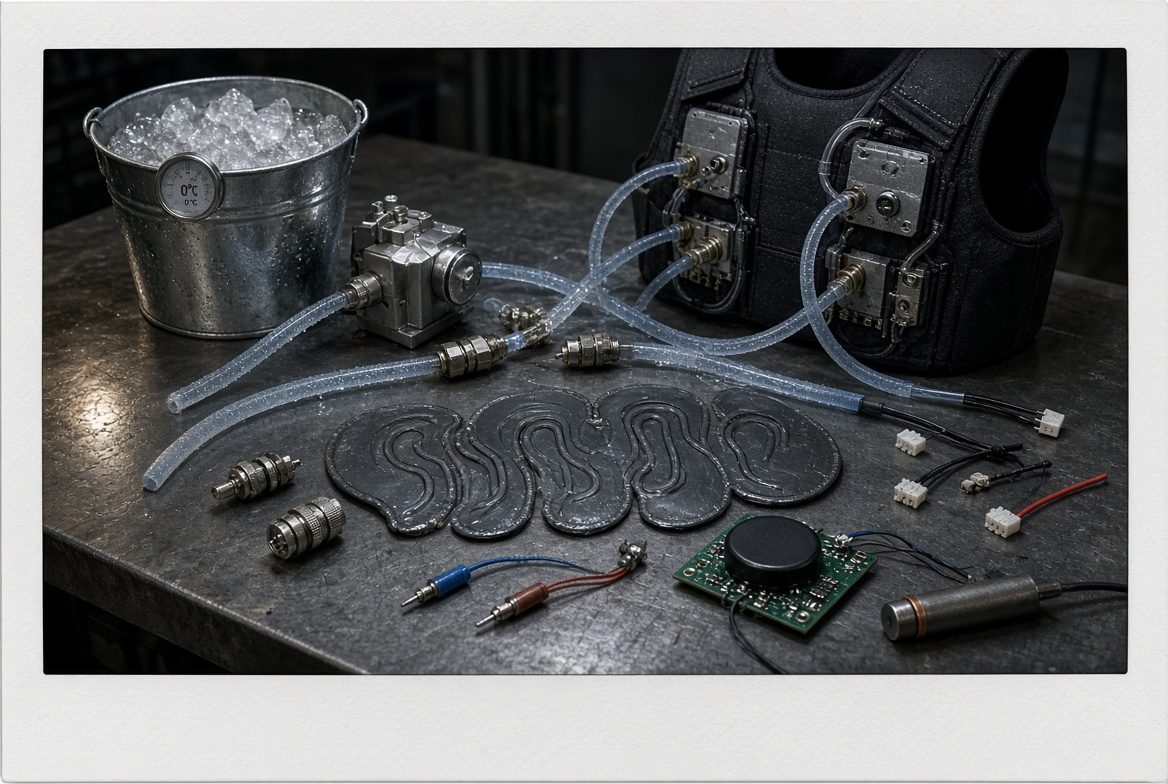
As long as there's ice in the bath, the bath sits at 0 °C — physics hands you a thermostat. A second tiny pump injects bath water into the garment loop; injection duty is the throttle. Five welded cooling panels in the vest do the heat exchange, two thermistors make a live wattmeter, and the puck integrates it into an ice gauge. In winter a 60 W heater cartridge takes the same loop to 40 °C.
Cruise
Supply water held at 14 °C. Feels like a cool sheet, indefinitely. Colder than that and the skin vasoconstricts, which cuts heat rejection and defeats the point.
Hold
Watts held at a target, scheduled off wheel speed: more at a stoplight, less at 30 mph where the wind is already working.
Boost
Double-tap your chest. Supply drops to 4 °C, flow doubles, and two pinch valves send it to the carotids, the armpits and the wrists — the surfaces that move core temperature fastest. Two minutes, then a lockout.
Air
Four micro fans move air through a spacer plenum under the armor, where sweat pools and no wind reaches. They idle at speed and spin up at stops. A comfort system, not a core-temperature one.
The build
Where it is, in order.
Design and specs
Pad map, dock geometry, cooling loop, mail line, three carrier tech packs, seamstress brief. Published below.
Bench loop
Pump, cold-therapy panels and the controller running off a bucket of ice on a table, reading real watts, before anything is sewn.
Donor build
Docks and mail panels bonded onto off-the-shelf compression garments by a technical seamstress. The coat from a bespoke tailor.
Ride test
Two weeks on the wheel with a pad-migration log, a slide-coupon test on a belt sander, and five wash cycles.
v1
Carriers cut from the patterns by a sample maker, panels RF-welded from dies, the puck on a real board. The one that gets photographed.
v2
A wheel-mounted micro-chiller on a power-tool battery with a breakaway umbilical, and a winter shell.
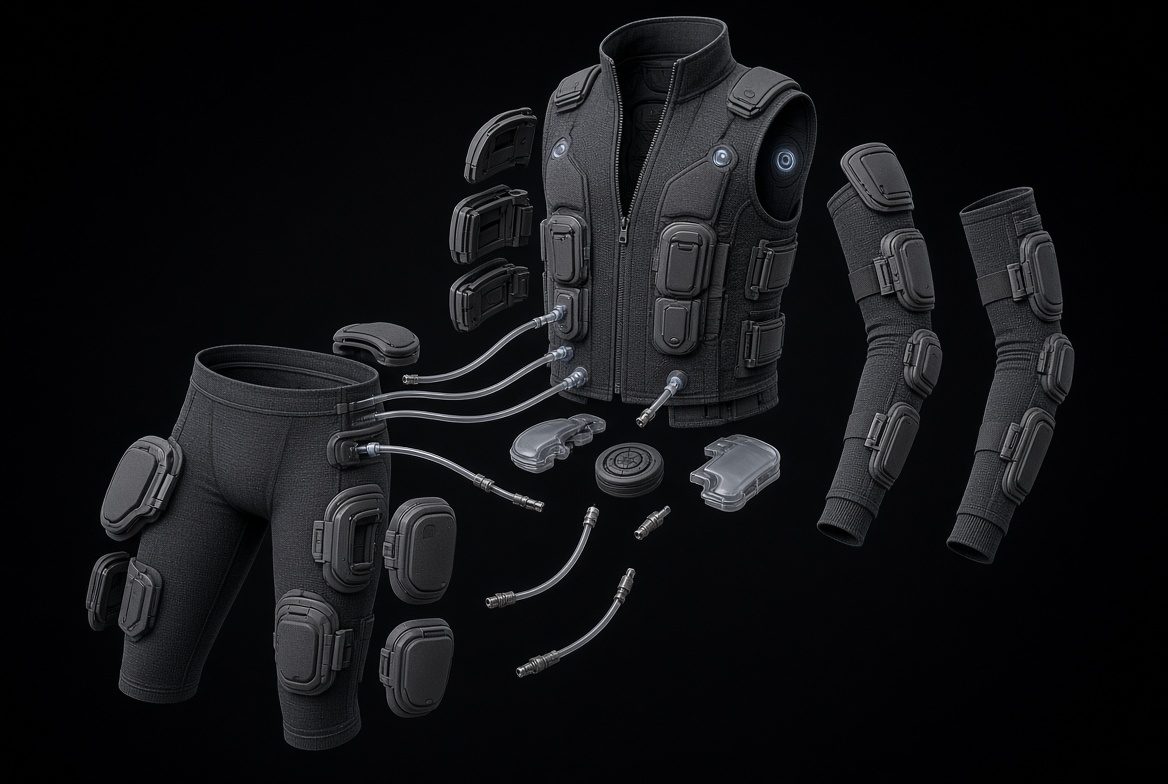
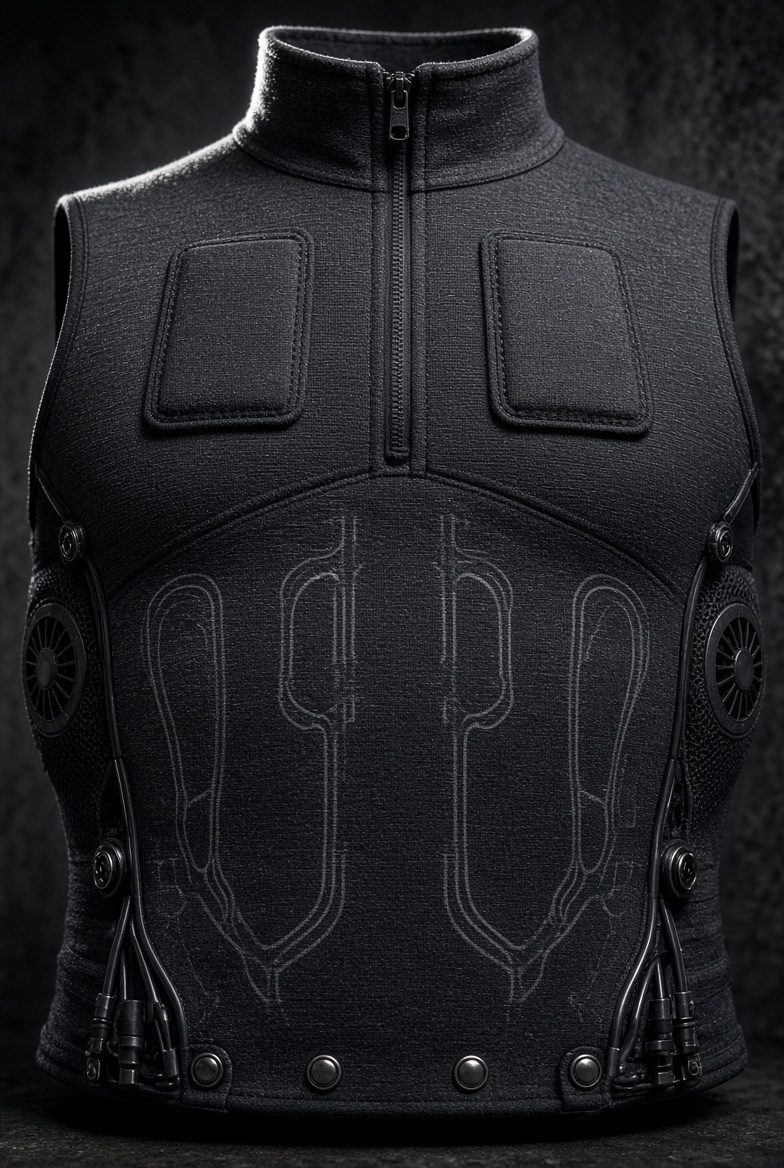
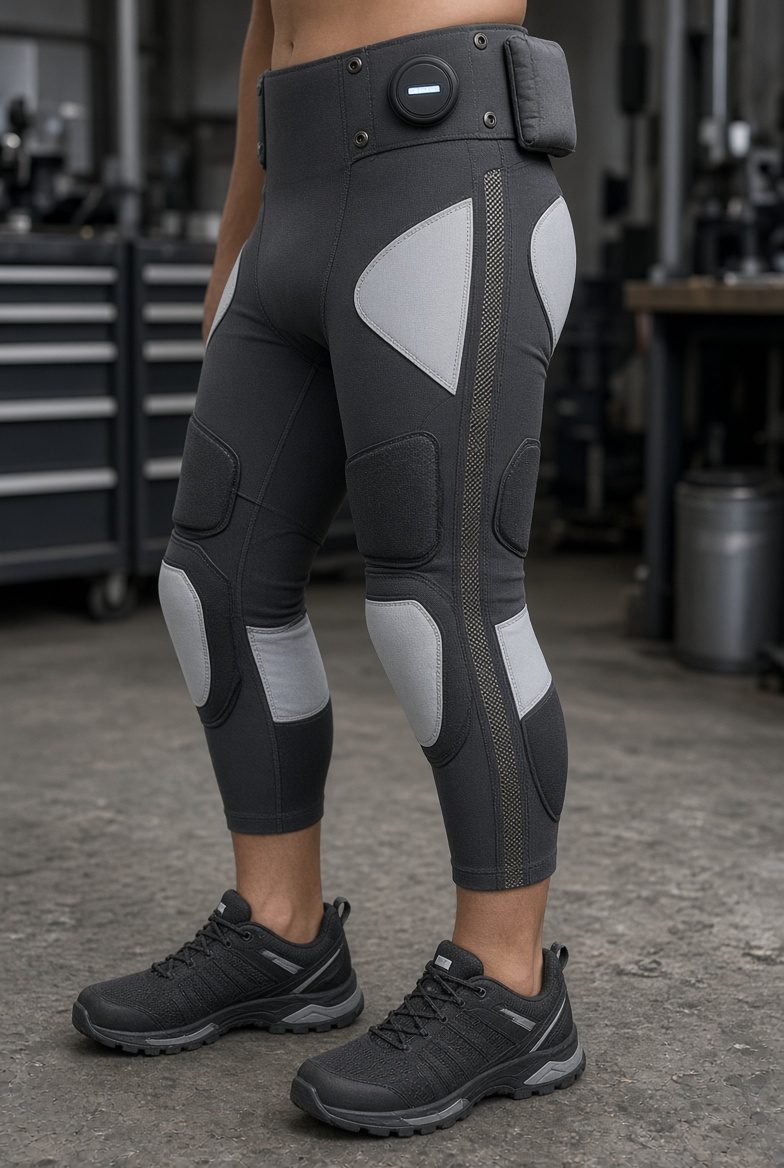
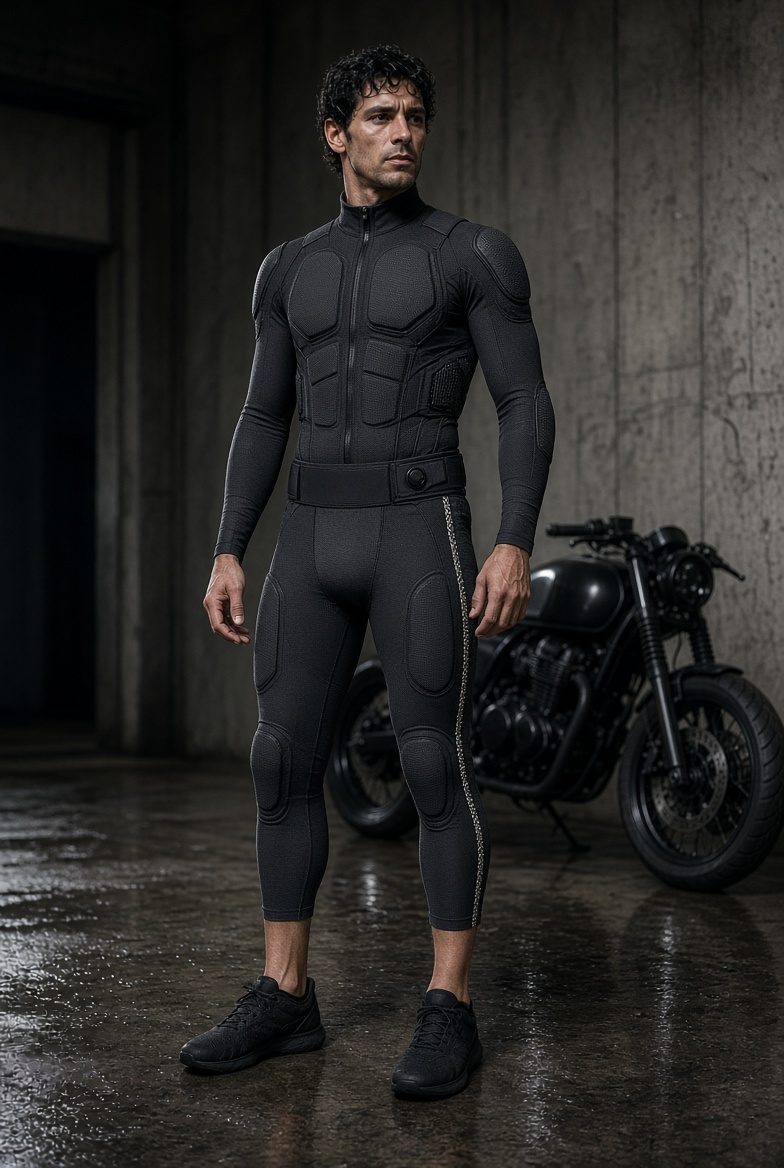
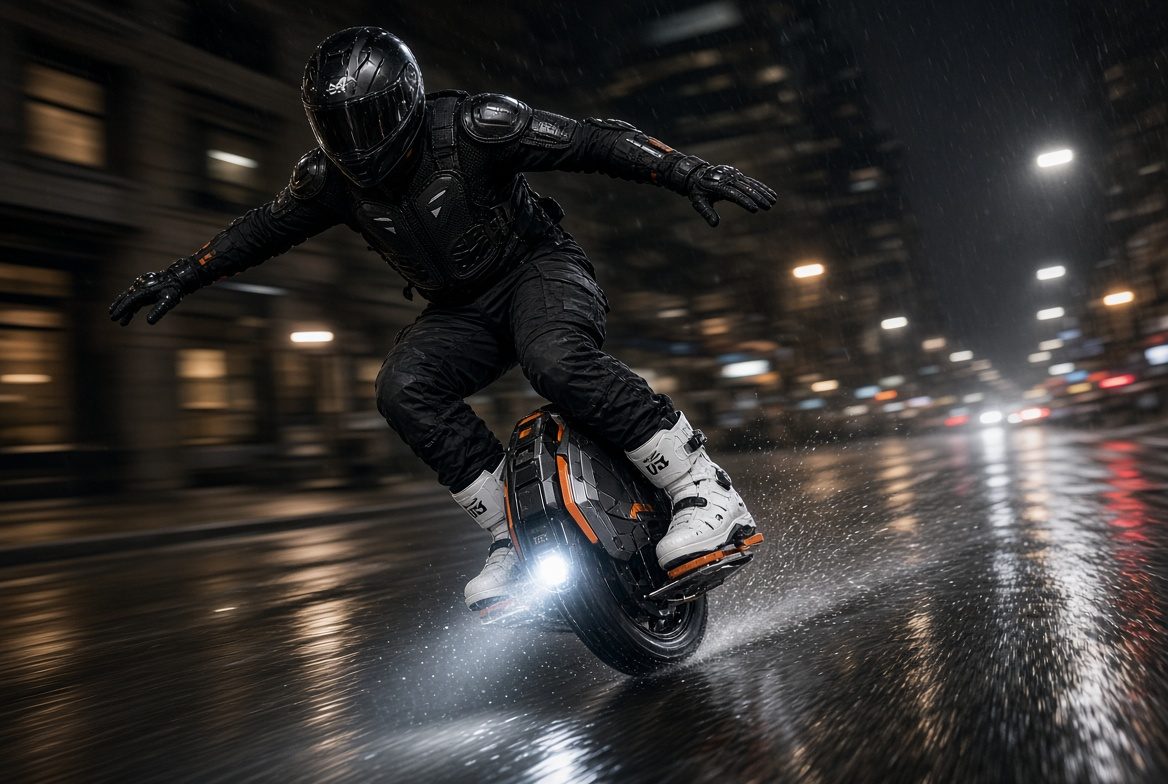
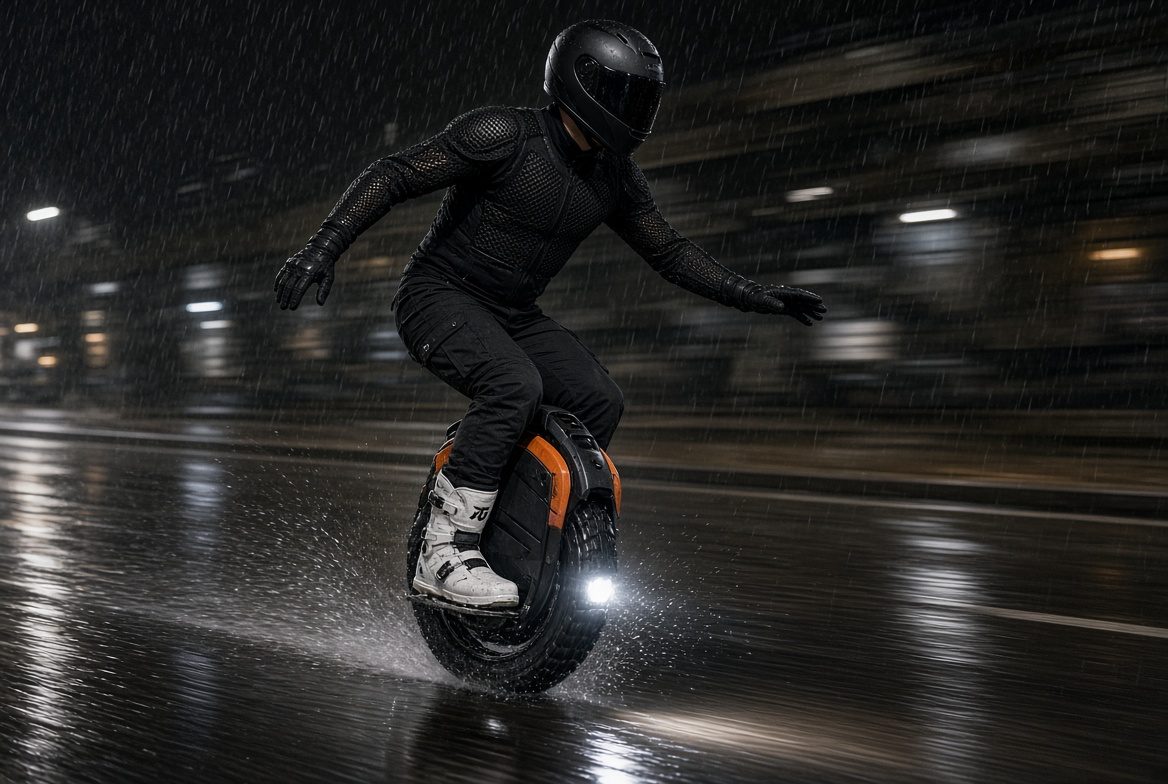
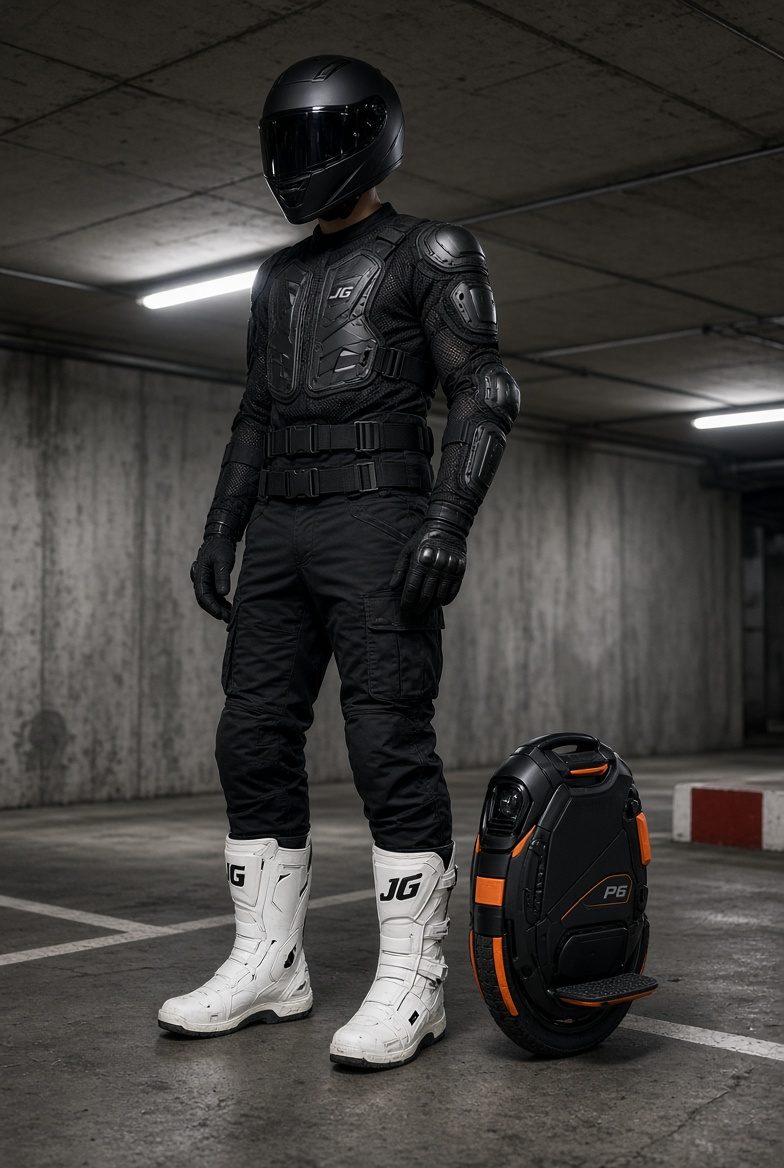
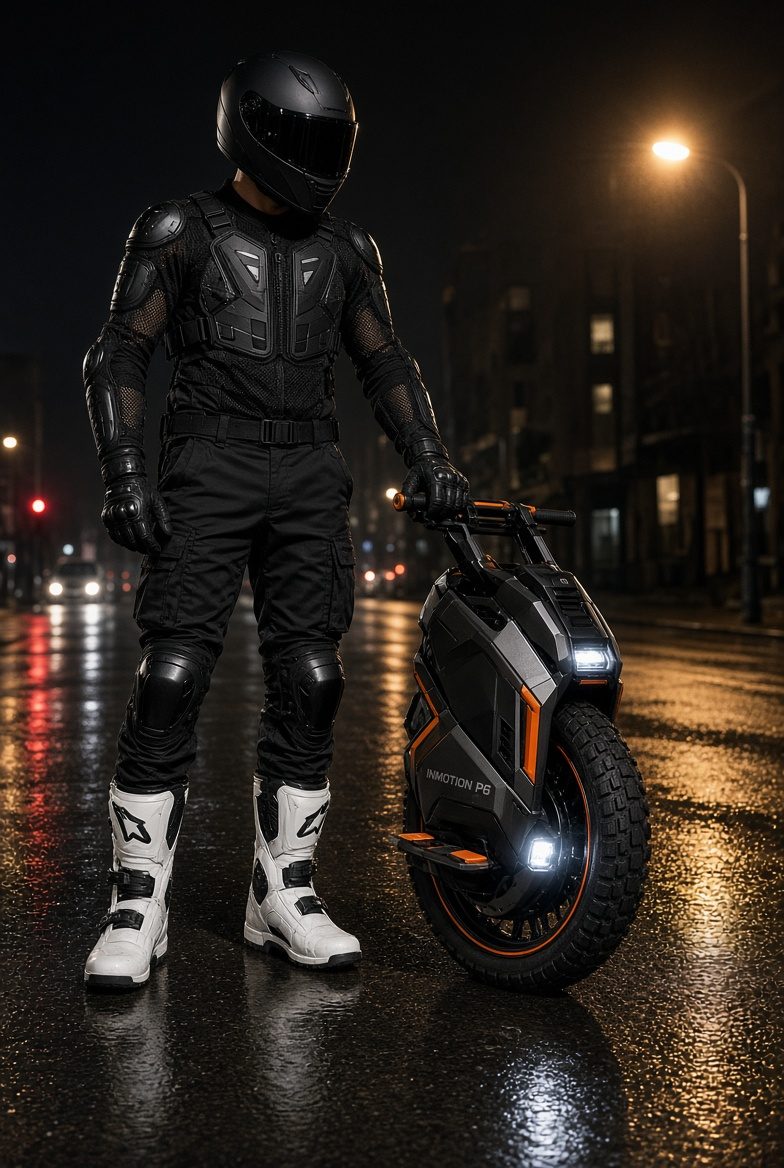
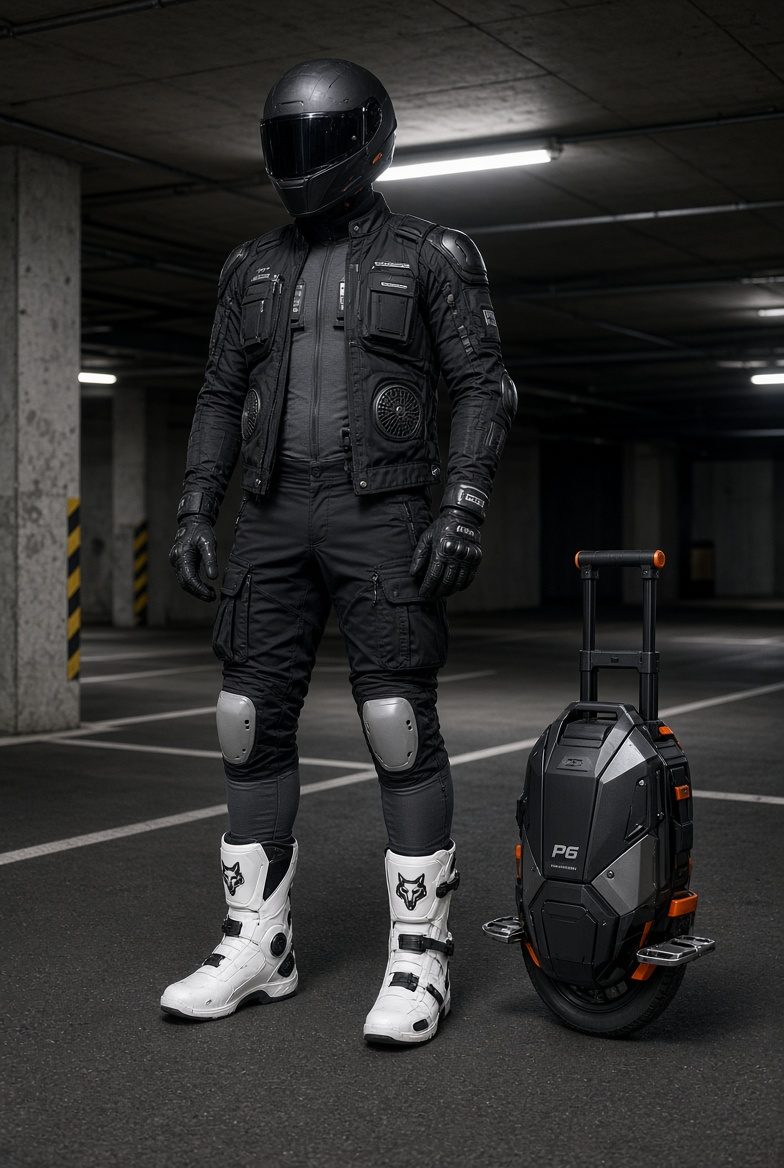
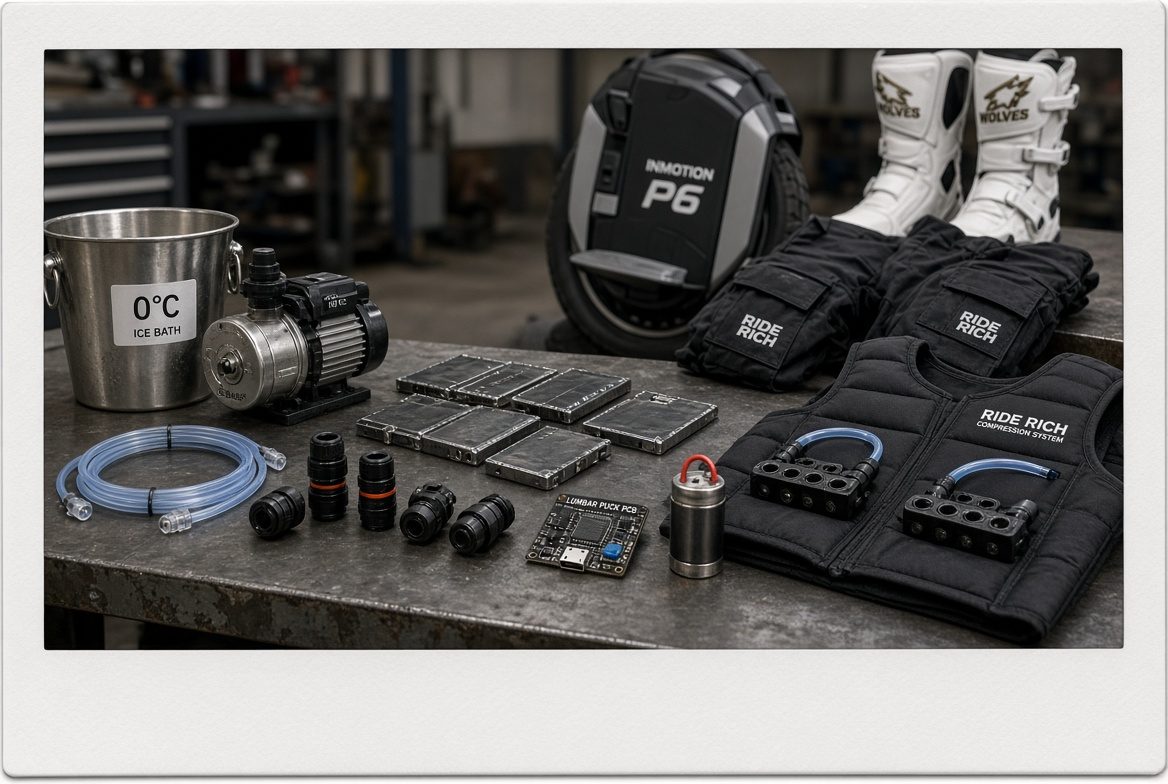
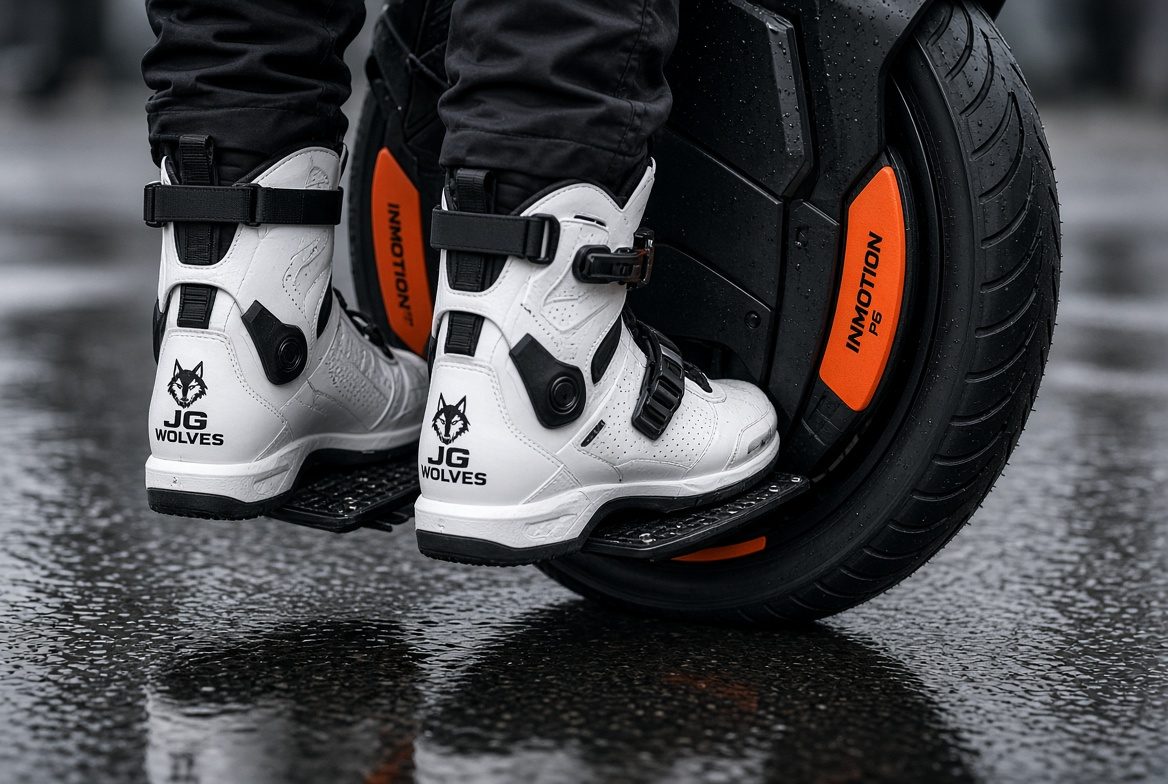
Every image on this page is a concept render generated from the specs. They get replaced with photographs of the real prototype as it's built. Nothing here is for sale yet.
Downloads
The specs, as they stand.
Open for riders, makers and suppliers to read, build from, and argue with. Version numbers change; the interfaces don't.
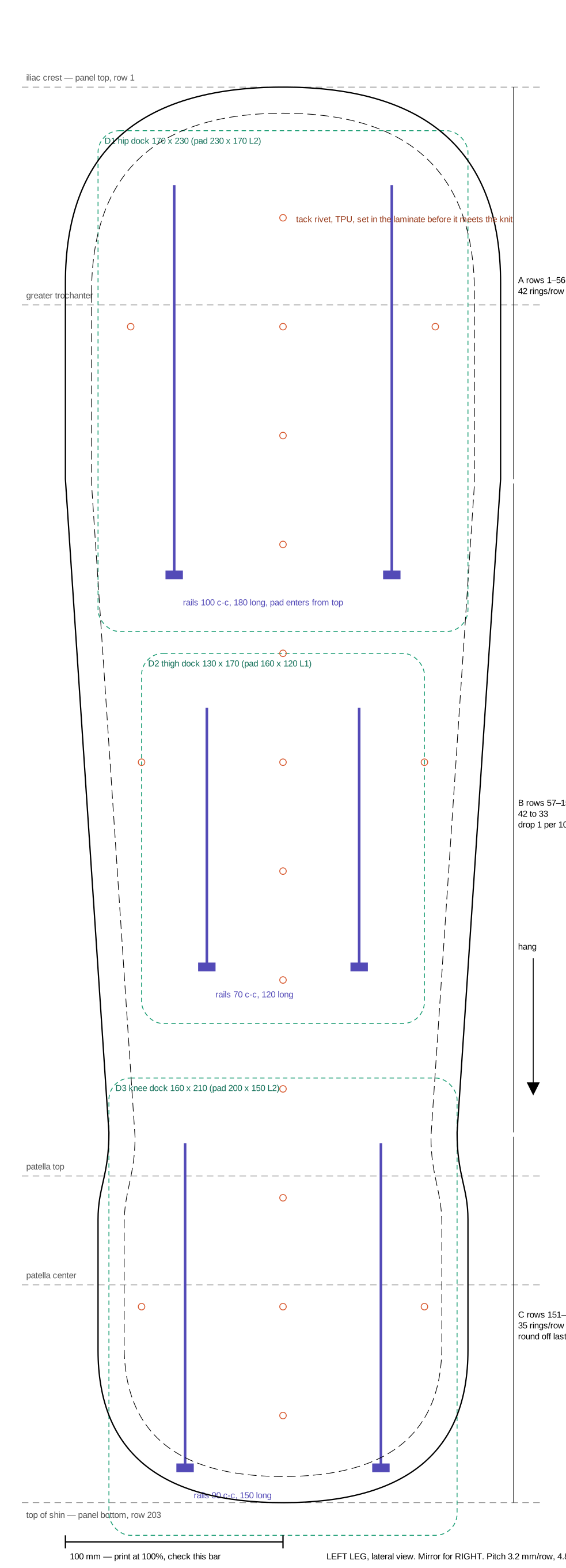
Nothing here is certified. CE ratings belong to the pads inside; the carrier frames change edge stiffness, so a certified product would retest with frames on. Build at your own risk, ride in it at your own risk, and tell us what broke.
Get involved
This gets built faster with more hands.
Riders
Test units go to riders who'll log every ride, every migration, every fall. Tell us your wheel, your size and where you ride.
Volunteer as a test riderMakers
Technical seamstresses, pattern and sample makers, TPU printers and welders, small-run PCB assembly. The tech packs tell you exactly what's needed.
Offer to buildSuppliers and wheel makers
Pads, films, ring mesh, pumps, and the wheel-side power and telemetry that make the auto modes possible.
Talk to usSame covenant as everything else on EUC Exchange: 100% of profits return to the community. If this ever becomes a product, the interface specs on this page stay open so anyone can make a module for it. Read the terms.